About MESPT
- Micro Enterprises Support Programme Trust, Tausi Lane 01, Westlands
- Nairobi P.O Box 187 - 00606 Kenya
- +254 722 207905 / 735 333154
- info@mespt.org
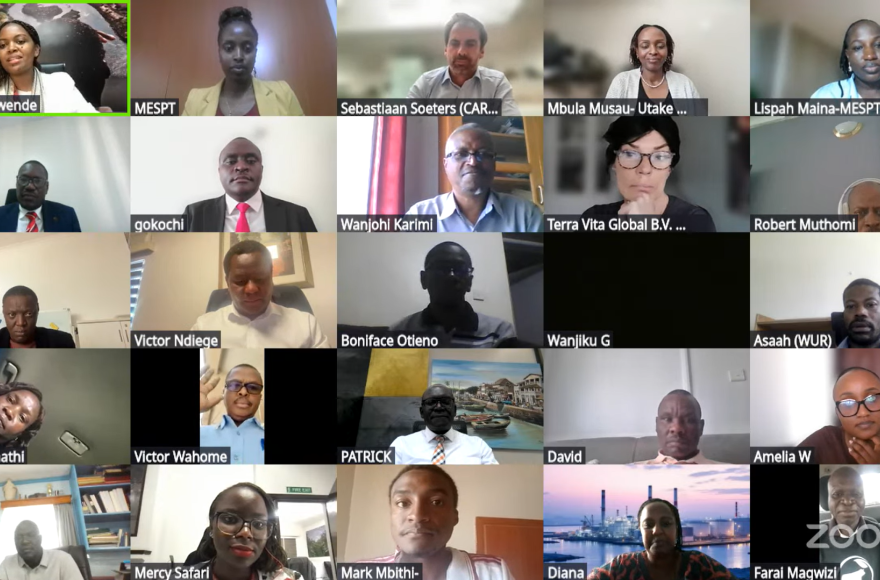
Access to finance can help enterprises grow, but capital alone is insufficient. Businesses also need financing suited to their circumstances, practical support and access to viable markets. This was a central message from the second BDCG 2026 Pre-Conference Webinar, held under the theme “Unlocking Finance, Enterprise Growth and Investment for Inclusive Market Transformation.”
Led by Kenya Climate Ventures (KCV), the webinar brought together financial institutions, development partners, enterprise-support organisations and entrepreneurs to examine what needs to change for more businesses to move from potential to sustainable growth and investment.
The panel featured Patrick Lumumba of African Guarantee Fund (AGF), Geoffrey Okochi of ECLOF Kenya, Lispah Maina of Micro Enterprises Support Programme Trust (MESPT), Sebastiaan Soeters of CARE Denmark and Mbula Musau of Utake Coffee Limited.
The discussion challenged the assumption that a loan is always the right solution for a growing business. Geoffrey Okochi emphasised that financing must match an enterprise’s stage of development, cash flow cycle and capacity. A small business seeking working capital has different needs from an established enterprise investing in expansion. Repayment schedules that overlook these differences can place pressure on otherwise viable businesses.
Patrick Lumumba highlighted collateral requirements, information gaps, limited skills and uncertainty about markets as barriers to enterprise financing. He explained how partial credit guarantees can help financial institutions share risk and reach underserved businesses. However, guarantees must be accompanied by capacity development for both lenders and enterprises. Understanding the wider value chain is essential to designing suitable financial products.
Sharing MESPT’s experience, Lispah Maina emphasized the importance of working with financial intermediaries whose priorities align with serving underserved agricultural and green enterprises. Clear agreements on eligibility, pricing and target beneficiaries, supported by monitoring, help ensure financing reaches the intended businesses on appropriate terms. Technical assistance also strengthens intermediaries’ ability to develop products and continue serving these segments.
Sebastiaan Soeters drew attention to the needs of community-led enterprises, particularly women- and youth-led businesses in climate-vulnerable settings. He called for practical support tailored to specific challenges, such as bookkeeping, meeting standards and strengthening supply chains. He also highlighted the need to connect grants, business support and investment opportunities into a coherent growth pathway.
Mbula Musau illustrated these challenges through Utake Coffee’s experience. She described the difficulty of securing financing when lenders do not fully understand a business model or developments within its sector. For specialty coffee enterprises, growth requires investment beyond purchasing coffee, including certification, branding, technical expertise and buyer relationships.
Her contribution reinforced the importance of financing market access. Entering regional and international markets takes resources, while maintaining those relationships requires continued support and the capacity to respond to changing requirements.
Across the discussion, a consistent message emerged: finance, enterprise development, market access and investment must work together. Stronger collaboration can help businesses access suitable capital, use it effectively and build sustainable commercial relationships.
These insights will inform discussions at the BDCG Annual Conference 2026, taking place from 25–27 November 2026 in Mombasa, Kenya. For more information about the conference, and opportunities to participate, visit www.bdcgnetwork.org
Watch the BDCG webinar: https://www.youtube.com/live/8JzpeDtZDVc?si=jZvkbPiHOPb9l4tr