About MESPT
- Micro Enterprises Support Programme Trust, Tausi Lane 01, Westlands
- Nairobi P.O Box 187 - 00606 Kenya
- +254 722 207905 / 735 333154
- info@mespt.org
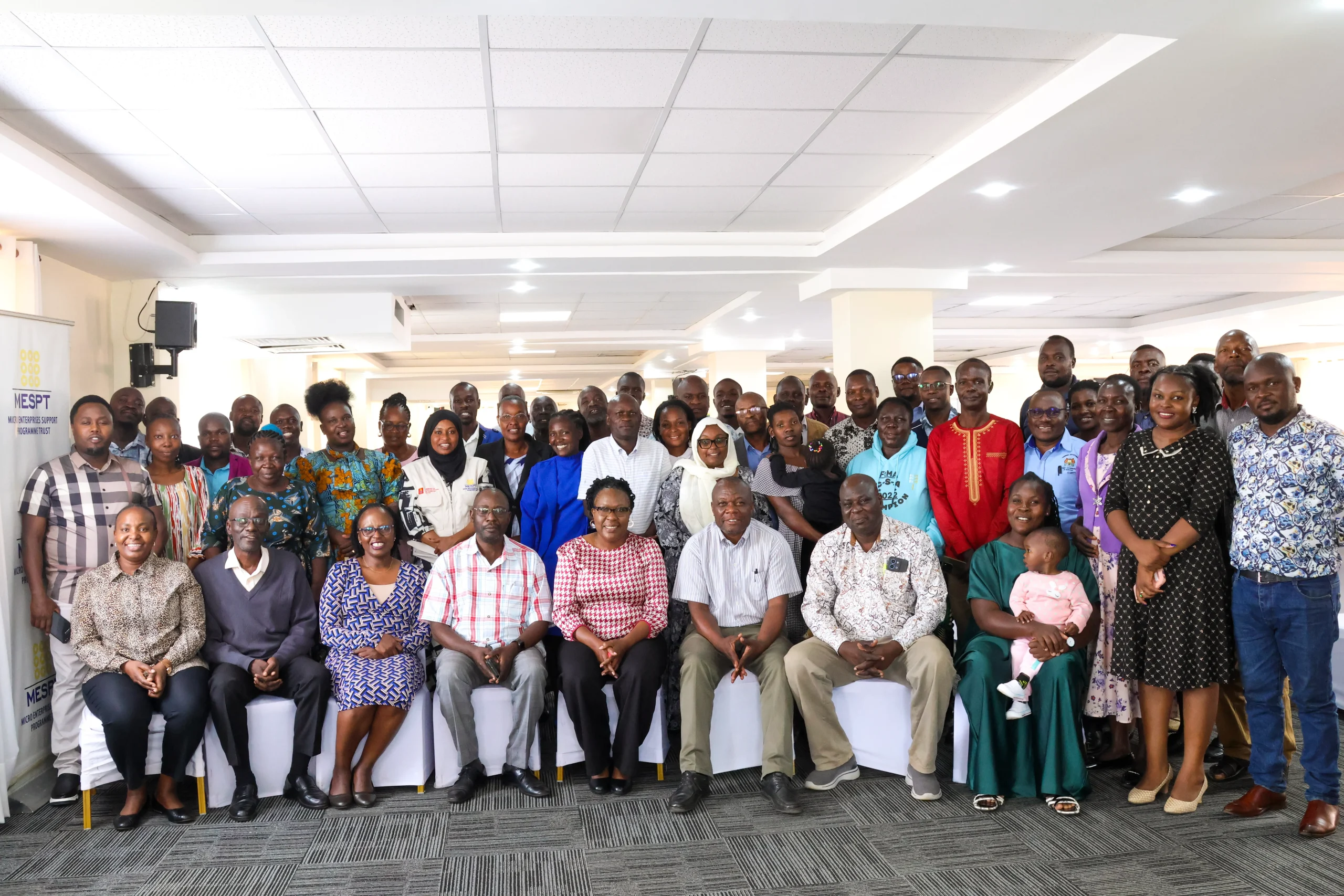
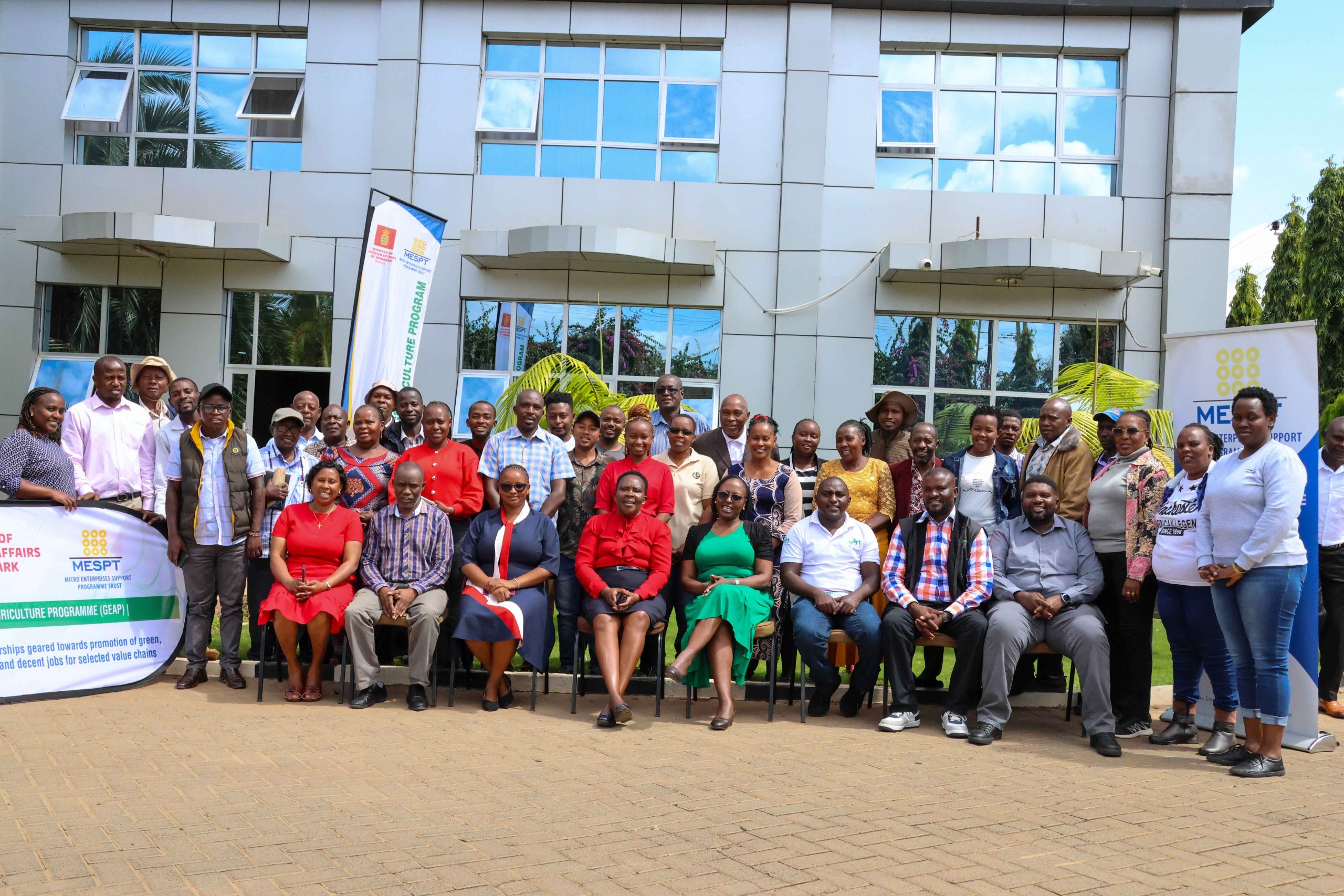
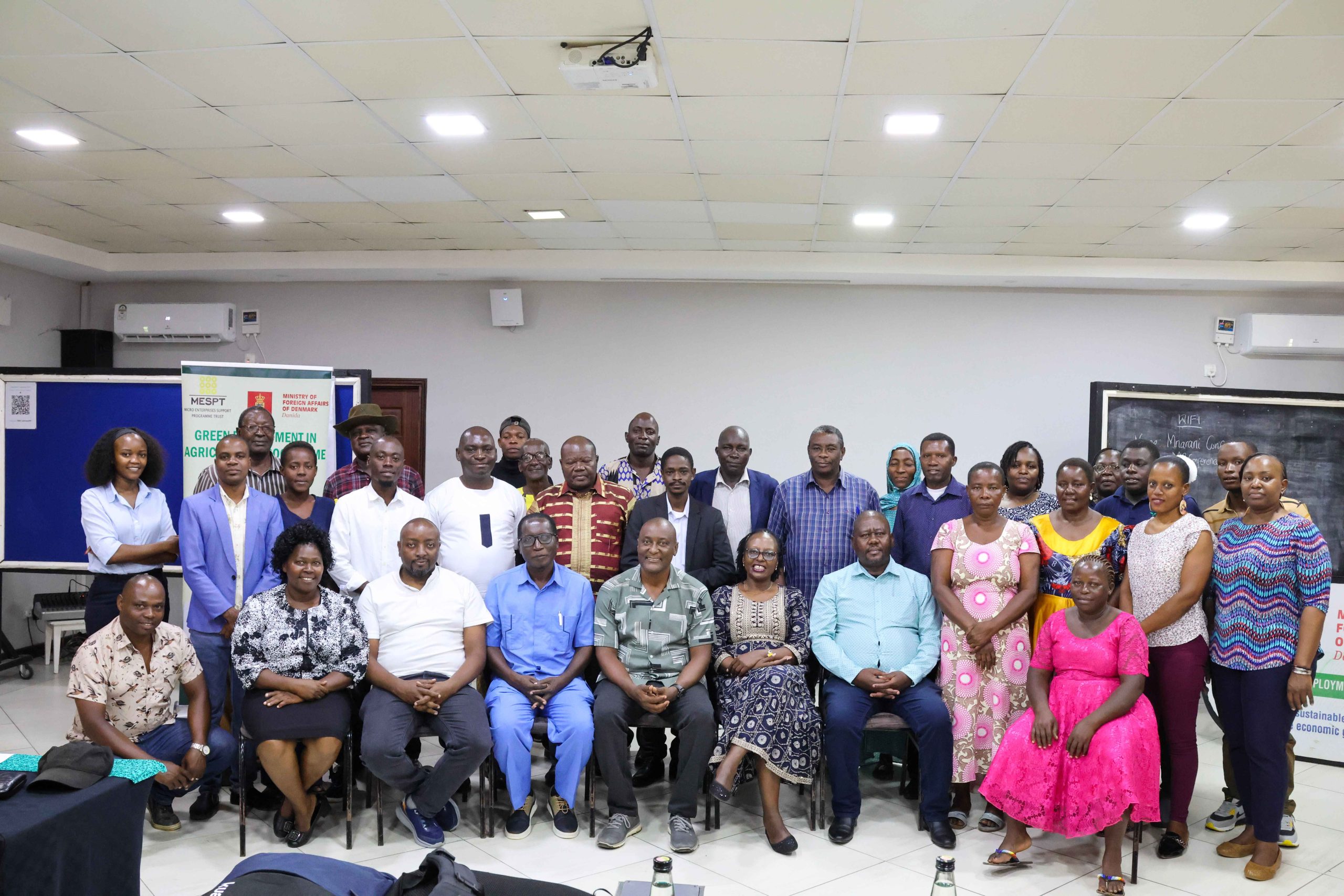
The Green Employment in Agriculture Programme (GEAP) has concluded a series of county closeout forums, bringing together farmers, cooperatives, county governments, private sector actors, research institutions, and development partners to reflect on five years of transformative impact across Kenya’s agricultural sector.
Implemented between 2021 and 2026, GEAP focused on strengthening agricultural market systems through enterprise development, financial inclusion, food safety, climate resilience, youth employment, and sustainable agricultural practices. The county forums provided an opportunity to celebrate achievements, document lessons learned and discuss how stakeholders can sustain and scale the gains realized through the programme.
At the national level, GEAP exceeded several of its key programme targets. The programme linked 43,061 farmers to markets against a target of 40,000 farmers, facilitated the aggregation of 143,124 metric tonnes of produce against a target of 130,000 MT, and generated cumulative sales valued at KES 6.51 billion, surpassing the target of KES 6.03 billion. The programme also supported the creation of 1,602 decent jobs, exceeding its target of 1,500 jobs.
Financial inclusion remained a key driver of impact, with GEAP facilitating KES 2.4 billion in agricultural and green financing and enabling 41,350 value chain actors to access financial services. Women accounted for 65% of loan recipients, while more than 10,000 youth accessed financial services through programme-supported interventions. In addition, 51 Financial Service Providers strengthened their capacity to offer agricultural and green financing products, contributing to a more inclusive and resilient agricultural financing ecosystem.
While these achievements demonstrate the scale of the programme, the county closeout forums highlighted the unique pathways through which different counties leveraged GEAP interventions to transform their agricultural systems. In Kisii County, the programme strengthened banana, poultry, and aquaculture value chains while promoting youth-led enterprise development and the adoption of innovative green technologies such as Black Soldier Fly (BSF), Azolla systems, and fireless brooders. Nyandarua County emerged as a strong example of cooperative-led commercialization, with dairy market systems and farmer organizations playing a central role in improving market access and strengthening agricultural enterprises.
In Nakuru County, GEAP contributed to climate resilience and environmental conservation efforts while strengthening dairy and avocado value chains through market development and climate-smart agricultural practices. Siaya County leveraged the programme to strengthen poultry and aquaculture enterprises, support food safety systems, and build sustainable community-based aggregation and market access models. In Bungoma County, investments in poultry, avocado, and aquaculture value chains strengthened commercialization, aggregation systems, and farmer participation in structured markets.
Along the Coast, Kwale County became a hub for coconut, cassava, moringa, and poultry enterprise development, with notable achievements in farmer certification, food safety systems, and value addition. Neighboring Kilifi County recorded significant gains in coconut and pineapple commercialization, hybrid coconut technologies, farmer certification, and climate action initiatives, including large-scale tree planting. Makueni and Machakos counties strengthened horticultural market systems through investments in mango, export vegetables, poultry enterprises, aggregation infrastructure, farmer certification, and food safety compliance. These interventions improved access to local and export markets while promoting enterprise growth and climate resilience.
In Western Kenya, Kakamega County strengthened poultry and aquaculture enterprises through certification initiatives, green technologies, and youth-led business service provision models that continue to support local employment and enterprise development. Meanwhile, Uasin Gishu and Trans Nzoia counties focused on avocado commercialization, aggregation infrastructure, climate-smart technologies, and food safety systems. Investments in aggregation centres, farmer certification, business service providers, and cooperative development strengthened market access and collective commercialization efforts across both counties.
Across all implementation counties, GEAP invested in farmer capacity development, training thousands of farmers in Good Agricultural Practices (GAP), food safety, financial literacy, entrepreneurship, governance, gender inclusion, and climate-smart agriculture. The programme also supported the adoption of green technologies, including BSF systems, Azolla production, butterfly water harvesting technologies, vermiculture, and fireless brooders, helping farmers improve productivity while building resilience to climate-related challenges.
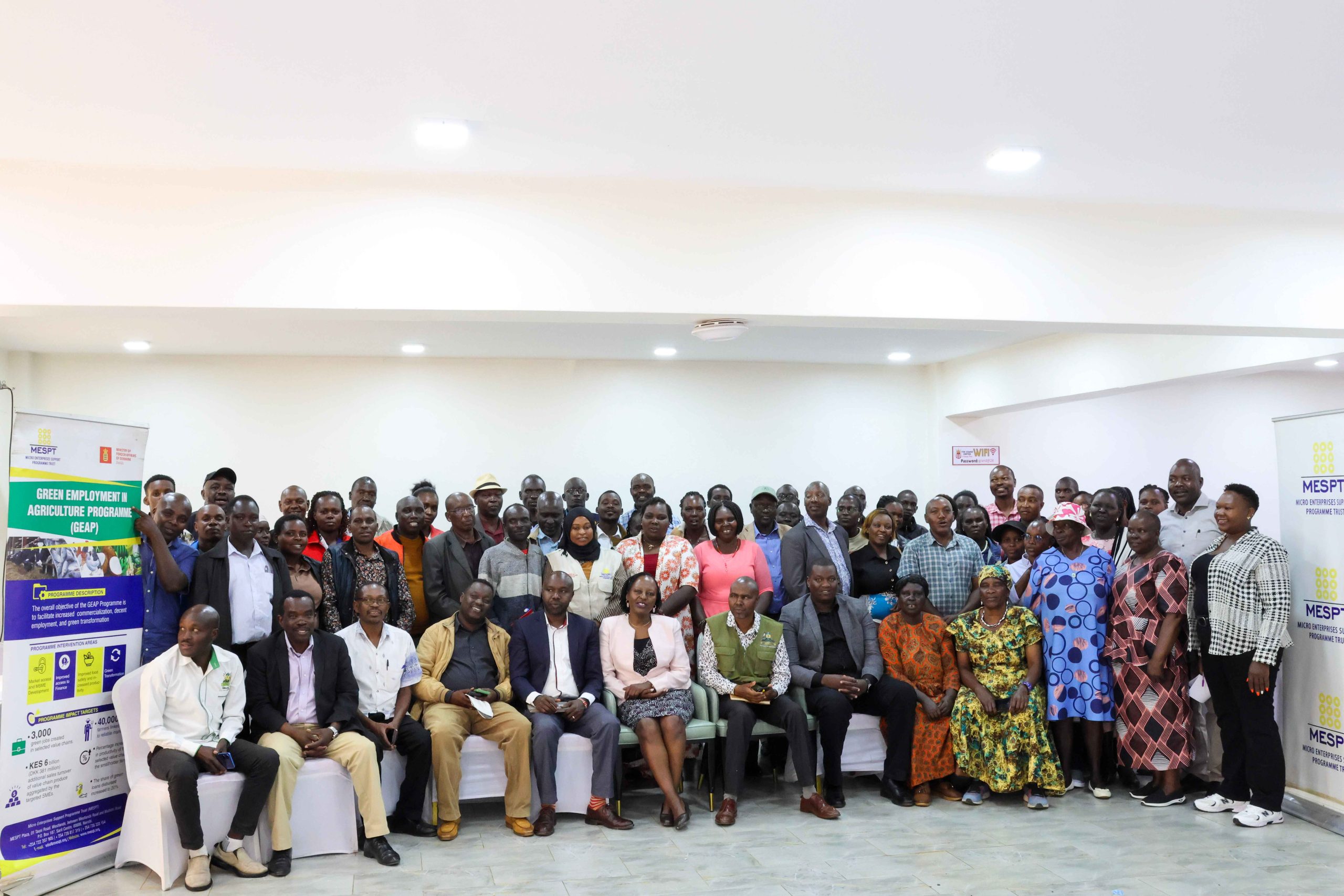
Strategic investments in aggregation centres, nurseries, collection centres, training facilities, water harvesting technologies, and enterprise support infrastructure continue to serve farming communities long after programme implementation. Equally important are the strengthened partnerships between farmers, cooperatives, county governments, research institutions, competent authorities, and private sector actors that will continue driving agricultural transformation.
As GEAP concludes, its legacy lives on through stronger farmer organizations, more competitive agricultural enterprises, empowered youth and women entrepreneurs, climate-smart innovations, and market systems that continue to create opportunities for sustainable livelihoods and resilient food systems across Kenya.