About MESPT
- Micro Enterprises Support Programme Trust, Tausi Lane 01, Westlands
- Nairobi P.O Box 187 - 00606 Kenya
- +254 722 207905 / 735 333154
- info@mespt.org

Building climate-resilient agriculture requires more than helping farmers increase production. It also means ensuring they can access affordable finance, appropriate technologies, and reliable markets while protecting the natural resources that sustain their livelihoods.
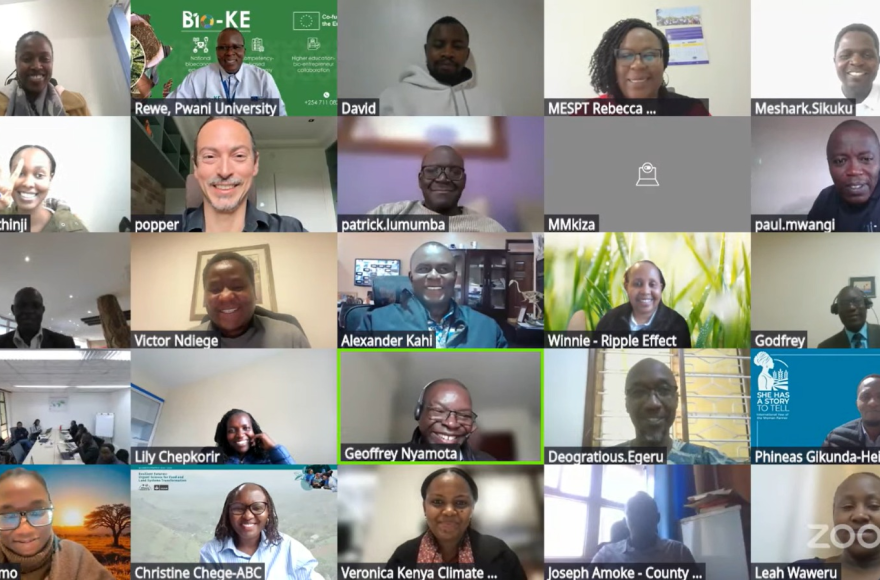
This message anchored the first webinar in the BDCG Annual Conference 2026 series, held on 18 August 2026 under the theme “Building Climate-Resilient and Competitive Agricultural Market Systems in Africa.” Convened by the BDCG Secretariat, MESPT and Pwani University, the session brought together 70 participants to explore practical solutions for strengthening agricultural market systems across the continent.
Moderated by Prof. Rewe of Pwani University, the webinar connected research and field experience, highlighting how enterprise development, healthy soils, inclusive finance and sustainable resource use can help farming communities respond to climate pressures.
MESPT Chief Executive Officer, Rebecca Amukhoye, in her opening remarks, underscored that climate resilience is both an environmental and an economic priority. Unpredictable rainfall, drought, floods, declining soil health and rising production costs continue to threaten agricultural livelihoods, with women and young people often facing disproportionate impacts.
She called for stronger support across the entire agricultural value chain, recognising farmers as entrepreneurs, investors and essential market actors. Increased production, she noted, must be matched by access to markets, finance, quality inputs, extension services and fair prices. Practical examples demonstrated what this approach can achieve.
Dr. Geoffrey Nyamota of iDE Kenya presented the organisation’s “one-to-many” model, which equips rural entrepreneurs to provide technology-enabled services to farmers in their communities. By combining machinery, business training, finance and ongoing support, the model makes agricultural technologies more accessible while creating viable local enterprises. Dr. Nyamota reported that iDE’s work in Kenya had reached more than 64,000 households, supported over 200 enterprises and helped save more than 2,100 tonnes of food.
The discussion also placed healthy soils at the centre of resilient markets. Meshak Sikuku of Ripple Effect highlighted how agroecological practices, farm diversification and strong farmer organisations can reduce dependence on external inputs, spread risks and improve market participation. He emphasised that restoring soil health takes time and requires sustained support.
Building on this, Dr. David Ojwang of Farm Africa Tanzania explored the potential of soil-carbon initiatives to complement farmers’ productivity and resilience gains with additional revenue. His presentation highlighted digital tools for monitoring soil carbon, alongside the need for credible verification, transparent information and collective action to strengthen smallholders’ participation in carbon markets.
The conversation extended beyond production and income to the food reaching consumers. Dr. Christine Chege of the Alliance of Bioversity International and CIAT called for market systems that deliver safe, nutritious and affordable diets. She highlighted opportunities to reduce food loss and develop enterprises that turn organic waste into fertiliser or animal feed, with women and youth participating as owners and decision-makers.
Dr. Rafael Popper, presenting the CASI-BIO initiative, reinforced the need to assess sustainability in its local context. He urged stakeholders to consider how investments affect food security, land, water, biodiversity and livelihoods, and to involve communities in shaping solutions.
Closing the session, BDCG Council Chair Victor Ndiege called for sustained collaboration between researchers, practitioners, institutions and farming communities to translate ideas into practical solutions.